


6
May
Microcystins in Tap Water: A Risk Not to Be Underestimated
What are microcystins
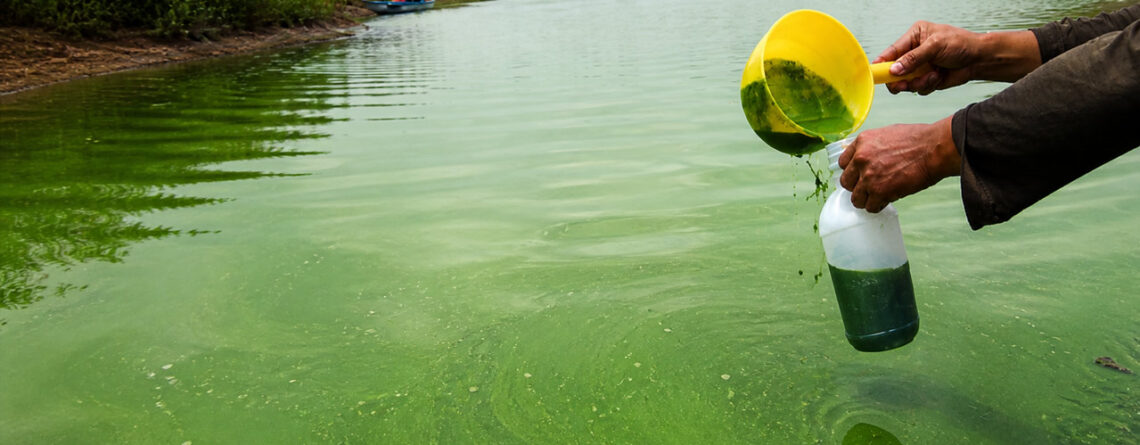
Cyanobacteria are photosynthetic prokaryotic microorganisms, often incorrectly referred to as “blue-green algae.” Some species, such as Microcystis aeruginosa, produce toxins that can be harmful to human health, known as microcystins.
The formation of cyanobacteria is often linked to algal blooms, meaning a rapid increase in their concentration during specific periods. This phenomenon occurs under particular conditions, such as the presence of nutrients in the water (for example fertilizers), higher temperatures, sunlight, and stagnant water, all of which can trigger intense blooms.
In tap water sourced from reservoirs, algal blooms are not uncommon in late spring. However, the presence of cyanobacteria is strictly monitored and controlled.
Microcystins are real toxins and, unlike geosmin (another compound produced by cyanobacteria), they have no taste or odor. Geosmin, while not toxic, can be detected even at very low concentrations and is responsible for the typical musty, earthy smell sometimes found in water.
The presence of geosmin in tap water, which causes a moldy or earthy odor, indicates an algal bloom. However, its presence does not necessarily mean that microcystins are also present. Laboratory testing is required to confirm this.
Microcystins in water and risks to human health
Even very low concentrations of microcystins in drinking water can pose a significant risk, particularly to the liver, where they inhibit protein phosphatases. Scientific literature also identifies other potential targets, including the kidneys, intestines, and nervous system. Some studies suggest a possible link between microcystins and cancer.
Legal limits
Italian Legislative Decree No. 18 of 2023 introduced microcystin-LR as a regulated parameter, setting a maximum limit of 1 µg per liter in drinking water.
How to remove microcystins from water
At the municipal water treatment level, microcystin-LR is removed through processes such as coagulation, adsorption (using granular activated carbon), and ultrafiltration when toxins are contained within cyanobacteria cells. When toxins are dissolved in water, strong oxidation and adsorption processes are used.
At the domestic level, cyanobacteria can be reduced using activated carbon filters combined with ultrafiltration, such as systems like WaterPro HF11. However, for the removal of dissolved toxins, reverse osmosis is recommended.
When should you be concerned?
If tap water has a musty or earthy taste, it may be unpleasant but is generally not a health concern, as public water systems are subject to strict and continuous monitoring. To improve taste and odor, installing a filter such as WaterPro HF11 can be helpful.
If the water is not directly supplied (for example, when storage tanks are involved), and a geosmin taste is present, this may indicate algal growth and therefore a potential risk of toxin formation. In such cases, laboratory testing is recommended.
If water does not come from the public water supply, periodic testing should always be carried out.
